!
Latest updates
How to Get to Koh Lanta: Flights, Roads and Ferries
Updated 8th Sep 2026
Things to Do on Koh Lanta: Diving, Old Town and the National Park
Updated 8th Sep 2026
Krabi Province Guide: Airport, Krabi Town and Choosing a Base
Updated 8th Sep 2026
Thailand for couples: which islands and parks close, and when
Updated 8th Sep 2026
Thai domestic flight tickets: fare rules, baggage deadlines and passenger rights
Updated 8th Sep 2026
Hat Yai Destination Guide
Updated 5th Sep 2026
Hat Yai is the biggest city in Thailand's Deep South, and it sits inland, in Songkhla Province. The city municipality holds around 190,000 people, and the wider Hat Yai district more than twice that. The coast is at Songkhla town, about half an hour away by road.
Hat Yai is the commercial and transport hub for the far south. Thai, Chinese and Malay influences run through its markets and its food.
Getting onward from Hat Yai
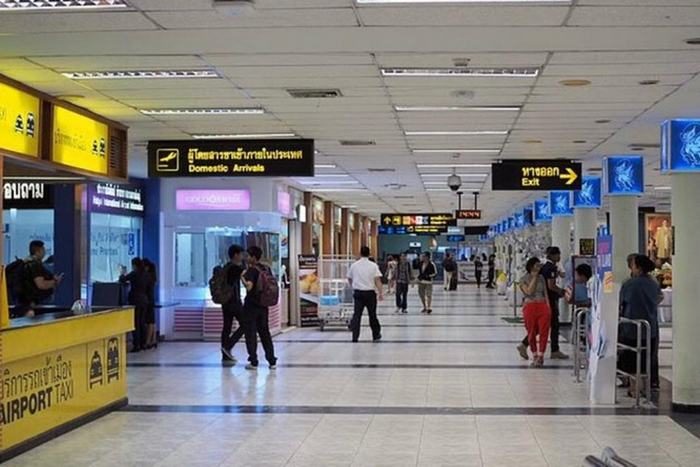
Hat Yai has its own airport. Its terminals, the transfer into town and the airlines that use it are covered on Hat Yai Airport. Individual routes have their own pages here, including Hat Yai to Bangkok, Hat Yai to Chiang Mai, Hat Yai to Phuket and Hat Yai to Udon Thani.
By rail
Hat Yai Junction sits on the State Railway of Thailand's Southern Line, and the line's two southern branches diverge in the vicinity. One branch runs to Padang Besar on the Malaysian border, the other to Sungai Kolok, near Kelantan, in Malaysia. The advance ticket office is reported as open daily from 07:00 to 17:00.
By road
There are two road terminals and they are not the same place. Hat Yai Bus Terminal 1, in the Kho Hong area, handles long-distance coaches to Bangkok, Trang, Surat Thani, Krabi, Phuket and Koh Samui, along with international services towards Kuala Lumpur and Singapore.
Regional minivans leave from a separate terminal known locally as Talat Kaset, covering shorter hops to Satun, Phatthalung, Trang and Nakhon Si Thammarat, and onward towards Krabi, Phang Nga and Phuket. Arriving on a long-distance coach does not put you at the minivan terminal, which matters if you are changing from one to the other.
Crossing into Malaysia
Two crossings into Malaysia are within reach of Hat Yai, and they work differently. The road crossing is at Sadao, in Songkhla Province, where the Thai checkpoint town of Dannok faces Bukit Kayu Hitam in Malaysian Kedah on the main highway between the two countries. Dannok is about 60 kilometres from Hat Yai by road, which is roughly an hour to an hour and a half.
The second is Padang Besar, the crossing the railway uses, and it is over the provincial line in Satun. A signposted walkway of about 1.2 kilometres, roughly twenty minutes on foot, links the two countries' immigration halls.
Visas, entry rules and visa runs are covered on Thai tourist visas and visa runs.
What does the UK government advise about travel near the Thailand-Malaysia border?
The United Kingdom's Foreign, Commonwealth and Development Office (FCDO) advises against all but essential travel to parts of the south near the Thailand-Malaysia border. They include Pattani, Yala and Narathiwat provinces, and the districts of Chana, Thepa, Na Thawi and Saba Yoi in southern Songkhla Province. The FCDO also advises against all but essential travel on the Hat Yai to Padang Besar train line.
Advice of this kind is revised without notice, so read the current version before you book. The FCDO publishes it on its regional risks page for Thailand.
In town
Wat Hat Yai Nai
The temple's draw is its reclining Buddha image, 35 metres long and 15 metres high and said to be the world's third largest. This one can be walked into: three internal floors of shrines and murals run through the base of the statue. Leaving a coin near the Buddha's shoulder is customary.
It also appears as Mahattamangkalaram Temple, so searches for it do not always agree. Published opening hours differ too, so check on the day.
Kim Yong Market
Kim Yong is a two-storey covered market in the centre of town, between Phet Kasem and Suphasarn Rungsan roads. It sells dried goods, spices, seafood, souvenirs and street food, and the mix reflects the town's Thai, Chinese and Malay influences. It is open through the day and busiest between 18:00 and 20:00.
Khlong Hae floating market
Khlong Hae runs on a canal about 5 kilometres north of the centre, with vendors cooking and selling from boats and drinks served in reusable bamboo and coconut-shell cups. It opens Friday to Sunday only, so a midweek visit finds nothing there. It runs from the early or middle afternoon into the evening, with the exact hours varying.
Day trips
Ton Nga Chang waterfall
Ton Nga Chang is a seven-tiered waterfall inside a wildlife sanctuary that spans Songkhla and Satun provinces. There is an entrance fee for the sanctuary.
Songkhla town and the lake
Songkhla is the provincial capital, on the coast about half an hour from Hat Yai by road, and the town is more than 200 years old. Its old quarter, along Nakhon Nok, Nakhon Nai and Nang Ngam roads, is a well-preserved run of Chinese and European shophouses left from its time as a trading port.
Songkhla Lake is the largest natural lake system in Thailand, roughly 1,040 square kilometres across three connected basins. Its southernmost reach, Thale Sap Songkhla, is where the lagoon meets the open sea beside the town.
Local culture
Zebra doves, known locally as merbok, are kept and entered in singing competitions across southern Thailand, including in Hat Yai and the provinces around it. The contests are held at weekends.
Hat Yai has traditionally been described as a centre for bullfighting in Thailand, with an arena near the airport road at Baan Neun Khun Tong. Whether the arena is still in use, and whether a contest is running, is worth checking locally before you plan around one.
Frequently asked questions
What can I do in Hat Yai in a day?
A day in town is enough for Wat Hat Yai Nai and Kim Yong Market, which is busiest in the early evening. Songkhla town is about half an hour away by road, and the old quarter and the lake together make it a day of its own. Ton Nga Chang waterfall is a second day trip, in a wildlife sanctuary outside the city.
How many days do I need in Hat Yai?
One day is enough for the town itself. Two lets you add a day trip, either to Songkhla town and the lake, or to Ton Nga Chang waterfall. If you want Khlong Hae floating market as well, one of those days has to fall between Friday and Sunday.