!
Latest updates
How to Get to Koh Lanta: Flights, Roads and Ferries
Updated 8th Sep 2026
Things to Do on Koh Lanta: Diving, Old Town and the National Park
Updated 8th Sep 2026
Krabi Province Guide: Airport, Krabi Town and Choosing a Base
Updated 8th Sep 2026
Thailand for couples: which islands and parks close, and when
Updated 8th Sep 2026
Thai domestic flight tickets: fare rules, baggage deadlines and passenger rights
Updated 8th Sep 2026
Koh Lanta: A Hidden Treasure Near Krabi
Updated 8th Sep 2026
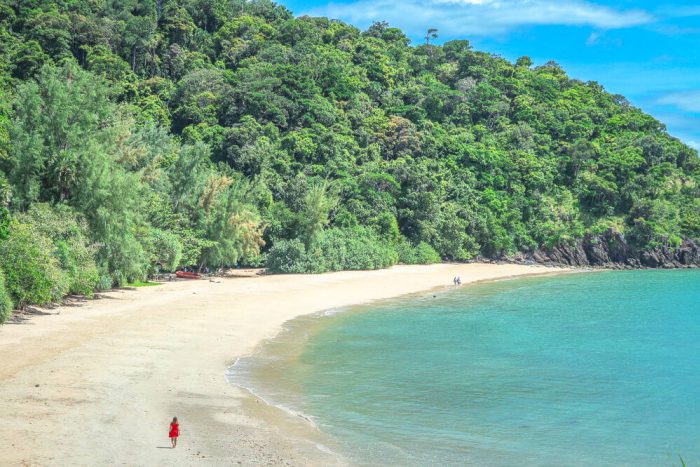
Koh Lanta is one of the calmer parts of Krabi province, and this page covers what there is to do once you are on the island: diving and snorkelling, the caves, Lanta Old Town, the national park at the southern tip, and the mangrove-lined east coast most visitors rarely reach. Krabi Airport (KBV) is the nearest airport, with onward travel to the island from there. For the route, the season and where to stay, see the Koh Lanta Destination Guide.
Diving and snorkelling from Koh Lanta
Koh Lanta is the launch point for some of the Andaman coast's best-known dive sites: Hin Daeng ("Red Rock") and Hin Muang ("Purple Rock"), two underwater pinnacles carpeted in the soft corals they are named for, plus Koh Haa and Koh Rok. Divers come for limestone pinnacles, caverns and swim-throughs, with reported sightings of whale sharks, manta rays, leopard sharks and other large pelagics at the deeper sites.
The diving season runs from November to April, when the seas are calm and visibility is good, according to PADI's own page on diving in Koh Lanta. February to April is the best window for manta ray and whale shark sightings specifically at Hin Daeng and Hin Muang, and the southwest monsoon from May to October brings rougher water and closures at many dive operators. Mu Ko Lanta National Park closes Koh Rok, Koh Haa, Hin Daeng and Hin Muang for part of that season, and its two published sources give different dates: the Department of National Parks' own page for the park gives 16 May to 31 October every year, while the National Park Office's list gives 1 June to 30 September for Koh Rok and 1 August to 30 September for Koh Haa with Hin Daeng and Hin Muang. Check the dates against the park before booking early in the season.
Koh Rok and Koh Haa also run as snorkelling day trips from Koh Lanta, with speedboats crossing in roughly an hour to shallow reef around Koh Rok and six small islands at Koh Haa. Operators sell these trips from around mid-October to mid-May, which starts before the park's own reopening date for Koh Rok, and suspend the speedboat crossings through the southwest monsoon, when seas are too rough to run them. A separate snorkelling trip visits Koh Ngai, Koh Muk, Koh Kradan and Koh Chuek, further south towards Trang; Koh Ngai is itself inside Mu Ko Lanta National Park, so the same seasonal conditions can apply there too.
The caves
Khao Mai Kaew Cave is a limestone cave system reached by a moderately challenging jungle trek of twenty to thirty minutes, followed by roughly an hour inside past stalactites and stalagmites. The terrain inside is uneven and slippery, with ladders, narrow passages and sections that require crawling, so a guide is effectively required; local guides wait at the trailhead with headlamps, and there is no need to book ahead. Tiger Cave (Tham Seua) is less strenuous and can be visited with or without a guide, and is often combined with a trip to Khlong Chak Waterfall and the island's southern beaches.
Lanta Old Town
Lanta Old Town sits on a sheltered bay that once offered safe mooring for trading vessels moving between Singapore and Moulmein (Mawlamyine, in modern Myanmar), a route that also called at Phuket and Penang. The Urak Lawoi, an indigenous seafaring people sometimes called sea gypsies, frequented the bay at least 500 years ago; Malay fishermen and Chinese traders arrived roughly 300 years later and built a permanent village along the seafront.
The town served as Koh Lanta Yai's own district capital for most of the twentieth century, until ferry services and administrative functions shifted to Koh Lanta Noi, the smaller island across the strait to the north, in the late 1990s. Today Old Town is a single street of wooden shophouses, the seaward row built on stilts over the water, home to a mix of Thai-Chinese, Thai-Muslim and Urak Lawoi residents.
Koh Lanta's Urak Lawoi community is reported to have relocated largely to Sang Ga U, a village on the island's south-east coast known for traditional boat-building and fish-trap making. It is a working village rather than an attraction, and is best visited with a local guide, if at all.
Mu Ko Lanta National Park and the south of the island
Mu Ko Lanta National Park's headquarters sits at Laem Tanod, the southernmost tip of Koh Lanta Yai, reached by the road that runs down the island's west coast. The park's address and facilities are listed by Thailand's Department of National Parks, Wildlife and Plant Conservation (DNP), which confirms that only this southern tip of Koh Lanta Yai lies inside the park; the inhabited north of the island, where the resorts and Lanta Old Town sit, is outside its boundary. A welfare shop and restaurant at the headquarters are open daily.
Tanod Beach, at the headquarters, is roughly 300 metres of sandy, shallow, turquoise-water beach, good for swimming. On 11 June 2026 the park closed the beach here, along with Koh Ha and Koh Ngai, over a Portuguese man o' war bloom, with no reopening notice found since. Thailand's tourism authority (TAT) separately names Koh Lanta among the places with box jellyfish sightings, so check current conditions and any posted notice before swimming.
The Tanod Nature Trail is a roughly two-kilometre circular jungle route, steep and rope-assisted near the start and moderating later into stairs; it takes about an hour round trip and passes a waterfall and a bat cave. The lighthouse on the headland is reachable either by an easy five-minute walk from the visitor centre and car park, or via the longer nature trail, and from the top it looks out over two bays and marks the southernmost point of Koh Lanta Yai.
The park charges an entrance fee at the headquarters, with a different rate for non-Thai visitors.
The east coast and the mangroves
Thung Yee Peng, on Koh Lanta's east coast, faces the mainland, not the open sea, and sees a fraction of the west coast's traffic. A community enterprise formed by local residents over twenty years ago to protect the mangrove forest runs a sunrise boat tour through the canals in a traditional wooden boat, paddled by a local boatman, alongside general canal exploration. Tour operators also list a side-trip to the Talabeng Islands from the same area, reported to have a hidden beach and a cave.
Why Koh Lanta feels quieter than its neighbours
Koh Lanta is often described as calmer and less developed than Ao Nang, whose Centerpoint complex is the usual point of comparison, and it is usually rated as bigger and less crowded than Koh Phi Phi. The island does host some full-moon-style beach parties, but these are consistently described as low-key next to Koh Phangan's Full Moon Party.
Frequently asked questions
When can I dive at Hin Daeng and Hin Muang near Koh Lanta?
November to April, with February to April best for whale sharks and manta rays at these two sites. Mu Ko Lanta National Park closes Hin Daeng and Hin Muang along with Koh Rok and Koh Haa for part of the year, and its two published sources disagree on the dates: the Department of National Parks' own page for the park gives 16 May to 31 October, and the National Park Office's list gives 1 June to 30 September for Koh Rok and 1 August to 30 September for Koh Haa with Hin Daeng and Hin Muang. Confirm the dates with the park or a dive shop before booking.
Is Lanta Old Town worth visiting on Koh Lanta?
Yes, if you want a half-day off the beach. Expect art galleries, a small community museum, waterfront restaurants and a long pier, in buildings a century old. It is a different pace from the west-coast beaches, built around trading-port history rather than another stretch of sand.
Does Mu Ko Lanta National Park cover the whole island?
No. Only the southern tip of the island around Laem Tanod sits inside the park; the beaches, resorts and Old Town in the north are outside it, and no entrance fee applies there. The fee is charged only at the southern headquarters, where the beach, trail and lighthouse are.
Is Koh Lanta quieter than Ao Nang or Koh Phi Phi?
Yes, on both counts. Ao Nang's nightlife centres on its Centerpoint complex, and travellers who want distance from it consistently rate Lanta as calmer; against Phi Phi's smaller footprint, Lanta reads as the bigger, quieter island. Its own beach parties exist but stay low-key next to Koh Phangan's Full Moon Party.