!
Latest updates
How to Get to Koh Lanta: Flights, Roads and Ferries
Updated 8th Sep 2026
Things to Do on Koh Lanta: Diving, Old Town and the National Park
Updated 8th Sep 2026
Krabi Province Guide: Airport, Krabi Town and Choosing a Base
Updated 8th Sep 2026
Thailand for couples: which islands and parks close, and when
Updated 8th Sep 2026
Thai domestic flight tickets: fare rules, baggage deadlines and passenger rights
Updated 8th Sep 2026
Ethical Travel in Thailand
Updated 8th Sep 2026
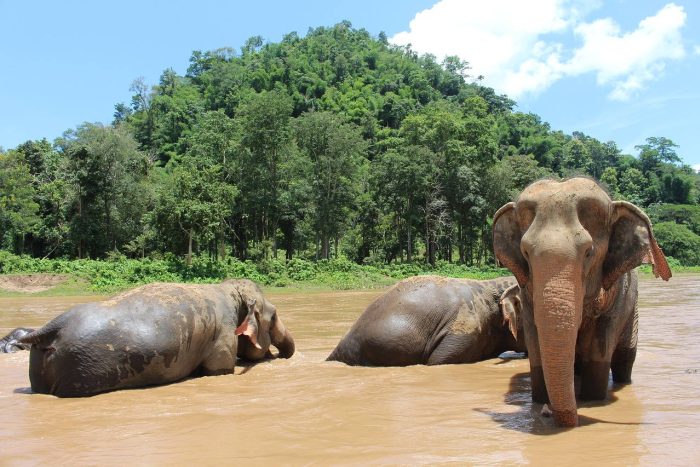
The rules that govern what a visitor may do inside a Thai national park, and what may be done with wild animals anywhere in Thailand, are published and specific. Two Acts passed in 2019 set out the prohibitions, a separate 2014 Act covers animal welfare, and two departmental notifications add rules on sunscreen and single-use plastics. This page sets out what they say, who publishes them, and what each one changes about what you do.
What the National Parks Act prohibits inside a park
The National Parks Act B.E. 2562 (2019) lists the acts prohibited within a national park in section 19. Two that reach ordinary visitor behaviour are section 19(2), collecting, taking away or otherwise endangering or deteriorating wood, soil, rocks, gravel, sand, minerals or other natural resources, and section 19(3), luring or taking wild animals away or injuring wild animals in any manner.
Sand, a shell or a stone taken from inside a national park is covered by section 19(2). Section 19(3) is the provision that applies to feeding animals to draw them closer, and the published wording is luring; injuring is listed separately in the same subsection.
Section 19 also covers construction and clearing, altering or polluting waterways, obstructing a waterway or a path, interfering with boundary markers, bringing in hunting tools or weapons, firing a gun or setting off fireworks, and leaving articles capable of catching fire. Section 21 requires permission from the competent official before an animal is brought into a park or released there, and that includes a pet as well as a release. Section 20 requires a visitor to comply with the orders of competent officials given under the Director-General's Rule.
Filming and photography done to seek a benefit are inside the Act as well. Section 19(6) covers entering a park to perform an activity with a view to seeking a benefit, and section 22 is the permission route for filming, photography, survey, study, research and nature study.
Sunscreen and single-use plastics: two rules you comply with personally
Four sunscreen substances may not be brought into or used in a national park: oxybenzone (benzophenone-3), octinoxate (ethylhexyl methoxycinnamate), 4-methylbenzylidene camphor and butylparaben. The Department of National Parks, Wildlife and Plant Conservation announced the ban, which was published in the Government Gazette on 3 August 2021. The department has since said that no brand as such is banned, so the check to make is on the ingredient list.
Foam containers and five categories of single-use plastic may not be brought into a national park either: plastic food containers, plastic cups, plastic straws, plastic spoons and forks, and plastic bags below a set thickness. That notification was published in the Government Gazette on 5 April 2022 and took effect the following day.
Breaching either notification is an offence. The practical version is to read a sunscreen's ingredients and repack food before you set off, not at the gate.
Check what is closed before you plan around it
The Department of National Parks publishes a directory of national parks arranged by province, and each park's current closure notice sits with its entry. The notices are specific: they close individual trails, waterfalls, summits, campgrounds and dive sites, with dates. A park can be open while the one feature you were going for is shut.
The directory is on the department's own national parks page, and it is written in Thai. Some notices cover a fixed season and others run open-ended until the department lifts them, so read the entry for the park you are going to. Park accommodation and campsites are booked through the department's own reservation system, which it links from the same portal.
Seasonal closure and seasonal weather are the same planning question, and our guide to the best time to visit Thailand covers the weather half of it. Marine parks are listed the same way and a notice can name individual reefs and dive sites, so a boat trip can be affected while the park itself stays open. Our Koh Lanta destination guide and Koh Phi Phi destination guide cover the places; the department's entry covers what is shut.
Wild animals, souvenirs and what an exhibiting venue must hold
The Wild Animal Conservation and Protection Act B.E. 2562 (2019) sorts wild animals into four statutory classes: conserved, protected, controlled and dangerous. It was published in the Government Gazette on 29 May 2019 and came into force 180 days later, and it repealed the 1992, 2003 and 2014 Acts.
Section 12 prohibits hunting conserved or protected wild animals. Section 17 prohibits possessing them or their carcasses outside a defined set of licensed and grandfathered cases, and section 29 prohibits trading in them, in their carcasses, or in products made from their carcasses. Section 15 prohibits abandoning or setting free conserved, protected or controlled wild animals.
The word carcass is where this reaches a souvenir stall. The Act's own definition at section 4 includes horn, skin, bone, skull, tooth, tusk, hair, scale, claw, carapace, shell and blood, so an ornament made from any of those parts of a protected species falls inside the prohibition on trade. Thailand's work under the Convention on International Trade in Endangered Species (CITES) is administered through the Department of National Parks.
Section 4 also defines a zoo by what it does: a place or area where wild animals are gathered and exhibited for recreation, study, education, survey, research, preservation or breeding, in the interest of that business. Section 33 requires anyone who intends to establish and operate one to hold a licence from the Director-General, and requires the project, plan and chart to comply with the zoo management standard prescribed in the Director-General's Notification. The licence and the standard are both things a venue can be asked about.
How the two Acts define a wild animal and a beast of burden
The Wild Animal Act covers animals of all species which generally exist and freely live in a natural state, and its section 4 definition expressly excludes beasts of burden under the law on beasts of burden. The Beasts of Burden Act B.E. 2482 (1939) defines beasts of burden as elephants, horses, cattle, buffalos, mules and donkeys for which a certificate of identification has been or must be prepared.
That 1939 Act is a registration and ownership statute. It requires an elephant to be brought for registration and a certificate of identification when it turns eight years old, it makes a district chief, or an appointee of the Minister of Interior, the registrar, and it puts that Minister in charge of the Act. The Act itself contains no welfare provision.
Welfare is dealt with by a separate statute. The Cruelty Prevention and Welfare of Animal Act B.E. 2557 (2014) defines an animal at section 3 to include a working animal, an animal used for transportation and an animal used for entertainment. Its section 20 prohibits any act of cruelty to an animal without justification, and its section 24 requires the owner or the relevant person to provide proper welfare where an animal is transported, used for work or used for entertainment.
What a sustainability certificate actually asserts
Four of the schemes operating in Thailand publish their criteria, and they certify four different things. Thailand's Sustainable Tourism Management Standard, published by the Designated Areas for Sustainable Tourism Administration (DASTA), became a Global Sustainable Tourism Council (GSTC) Recognized Standard in May 2018. DASTA's Criteria for Thailand's Community-Based Tourism Development followed in July 2018.
The community-based criteria set out five dimensions: community-based tourism management; economic, social and quality-of-life management; cultural heritage preservation; natural resource and environmental management; and service quality. Whether an operator works to a published standard of that kind is at least a checkable question.
Green Leaf is a hotel environmental certification run by the Green Leaf Foundation, registered on 17 March 1998 by six bodies including the Tourism Authority of Thailand, the Thai Hotels Association and the United Nations Environment Programme. Hotels are awarded one to five leaves against environmental checklists, assessed by an audit team the foundation appoints.
The Tourism Authority of Thailand introduced its own Sustainable Tourism Goals in 2023, adapted from the United Nations Sustainable Development Goals across governance, socio-economic impact, cultural preservation and environmental responsibility. It rates operators against them through a Sustainable Tourism Acceleration Rating (STAR), from three to five stars. The authority said more than 2,300 businesses had joined as at August 2025.
GSTC recognition applies to the set of standards, not to the certification process and not to any individual certificate holder. GSTC's own position is that recognition does not establish that a certification process is reliable, only that the standards used include the minimum elements for sustainability.
Checking a tour operator or a guide
Tourism businesses, guides and tour leaders in Thailand are licensed by the Department of Tourism, which sits under the Ministry of Tourism and Sports. The department's site carries a blue panel labelled "License Check". It opens the department's licence-information service, where you enter a company name or a licence number and the service returns the company name, the licence number and the registration status.
The panel is on the Department of Tourism's homepage. The department's own contact page publishes its call centre number, 02-401-1111, listed as available 24 hours.
The licence check runs as a browser application and its labels are in Thai, so it is worth having the company name or the licence number written down before you open it.
The rest of the practicalities on the ground sit in our Thailand travel tips guide.
Frequently asked questions
Can I take shells, sand or stones home from a Thai national park?
No. Section 19(2) of the National Parks Act B.E. 2562 (2019) prohibits collecting, taking away or otherwise endangering or deteriorating wood, soil, rocks, gravel, sand, minerals or other natural resources within a national park. Sand is named in that list.
What does the National Parks Act say about feeding wild animals in a park?
Section 19(3) prohibits luring or taking wild animals away, or injuring wild animals in any manner, within a national park. The published wording is luring rather than feeding, and feeding animals to draw them closer is what that provision reaches.
Which sunscreen ingredients are banned in Thailand's national parks?
Four: oxybenzone, octinoxate, 4-methylbenzylidene camphor and butylparaben. The Department of National Parks announced the ban and it was published in the Government Gazette on 3 August 2021. The department has since said that no brand as such is banned, so the ingredient list is what to read.
What licence does a Thai venue that exhibits wild animals need?
Under section 33 of the Wild Animal Conservation and Protection Act B.E. 2562 (2019), anyone who intends to establish and operate a zoo needs a licence from the Director-General, and the project, plan and chart must comply with the zoo management standard prescribed in the Director-General's Notification. Section 4 of the same Act defines a zoo by function: gathering and exhibiting wild animals for recreation, study, education, survey, research, preservation or breeding, in the interest of that business.
How do I check that a Thai tour operator is licensed?
The "License Check" panel on the Department of Tourism's site opens the department's licence-information service, where you enter the company name or the licence number and it returns the company name, the licence number and the registration status. The Department of Tourism is the licensing authority for tourism businesses, guides and tour leaders, and it publishes a call centre number on its contact page.
What does Thai law say about buying a wildlife souvenir?
Section 29 of the Wild Animal Conservation and Protection Act B.E. 2562 (2019) prohibits trade in conserved or protected wild animals, in their carcasses, and in products made from their carcasses. The Act's definition of a carcass at section 4 covers horn, skin, bone, skull, tooth, tusk, hair, scale, claw, carapace, shell and blood, which is wide enough to reach a carved ornament or a piece of jewellery.