!
Latest updates
How to Get to Koh Lanta: Flights, Roads and Ferries
Updated 8th Sep 2026
Things to Do on Koh Lanta: Diving, Old Town and the National Park
Updated 8th Sep 2026
Krabi Province Guide: Airport, Krabi Town and Choosing a Base
Updated 8th Sep 2026
Thailand for couples: which islands and parks close, and when
Updated 8th Sep 2026
Thai domestic flight tickets: fare rules, baggage deadlines and passenger rights
Updated 8th Sep 2026
Koh Samui Destination Guide
Updated 2nd Sep 2026
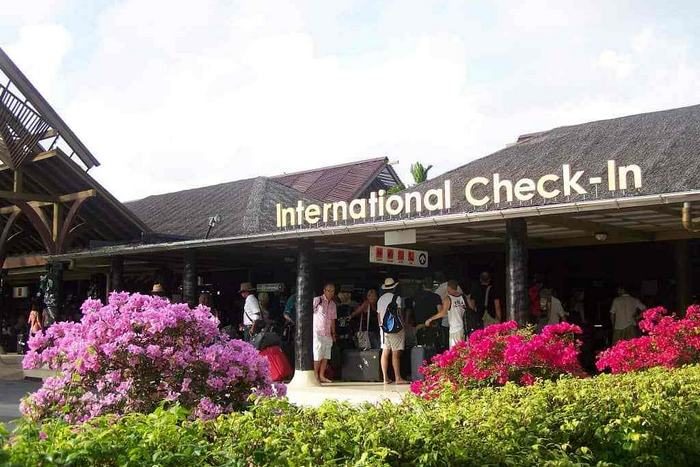
Koh Samui is an island in the Gulf of Thailand, off Surat Thani province, and the town of Nathon on its west coast is the island's administrative and transport centre. Its beaches are not interchangeable: several are shallow and calm, one is described by Bangkok Airways' own guide as unsuitable for swimming, and two carry a documented history of serious jellyfish stings. This page covers which beach suits which kind of trip, when to come, what there is to do away from the sand, and what tends to catch people out.
Koh Samui began rotating its mains water supply between three zones on 3 August 2026, after drought cut clean-water production. The Provincial Waterworks Authority's Samui branch announced the measure on 28 July 2026 for an initial seven days, and island demand was reported at roughly twice what the pipeline from the mainland was supplying. Ask your accommodation whether it still affects them before you travel.
Getting there by air
Koh Samui has its own airport, Samui International Airport (USM), and Bangkok Airways is the dominant carrier there. What the terminal is like and how to get from it to the beaches belong to the Koh Samui Airport page. The schedules sit on the Bangkok to Koh Samui and Koh Samui to Bangkok route pages.
You do not have to fly to the island itself. Surat Thani Airport (URT) and Nakhon Si Thammarat Airport (NST) on the mainland both feed Samui by road and ferry, and Thai Vietjet began selling that combination as a single booking, called Fly2Ferry, on 28 April 2026. Choosing between the two ways in is the subject of the Koh Samui flights guide, and the mainland gateway has its own Surat Thani Airport page.
The beaches, and how they differ
Bangkok Airways publishes a beach-by-beach guide to the island, and it is specific about which of them are shallow and calm and which are not. The lengths below are approximate, and they are the figures that guide gives.
| Beach | Where it is | What to expect |
|---|---|---|
| Chaweng | East coast | The longest and busiest, with jet skiing and parasailing. Severe box jellyfish stings were recorded here between 1997 and 2015 |
| Lamai | East coast, south of Chaweng | About 4 kilometres, rock formations, calm water and snorkelling |
| Silver Beach (Thong Takian) | East coast, between Chaweng and Lamai | About 250 metres of ivory-white sand, shallow and clear, described as ideal for swimming |
| Bophut | North-east | A crescent of about 2 kilometres with Fisherman's Village behind it. Bangkok Airways says the sand is rough, the water deep and the beach not suitable for swimming. Severe box jellyfish stings were recorded here between 1997 and 2015 |
| Maenam | North, near Bophut | About 5 kilometres, with snorkelling, kayaking and paddleboarding |
| Choeng Mon | North-east | About 700 metres, calm shallow water with shade behind it |
| Lipa Noi | West coast | About 4.5 kilometres, shallow and clear, used for swimming, snorkelling and kayaking |
| Bang Po | Northernmost | About 4 kilometres, with fewer visitors and more of a local community |
| Taling Ngam | West coast | Sunsets, and a nature walkway |
Bophut is the exception on that list. People still stay there for Fisherman's Village and its restaurants, and swim somewhere else.
Fisherman's Village holds a walking-street market on set evenings. The days and the hours vary, so check locally rather than building a day around it.
When to come, and why Samui does not follow the national pattern
Samui is on the Gulf coast, and southern Thailand's two coasts do not get their rain at the same time of year. Bangkok Airways' weather guide, dated March 2025, calls the island quite dry compared with the rest of southern Thailand during the mid-year months, and puts its heaviest rainfall and strongest winds in October and November, with November the wettest month. That makes the best time to visit Thailand a different answer here from the one that applies on the Andaman coast.
- December to February is the driest stretch, and the airline calls it the best time to visit.
- March to May is the hot season, with sunshine through most of the day. The water is at its clearest in February and March.
- June to September brings frequent showers and occasional downpours, and is still comparatively dry by southern Thai standards.
- October to November brings the heaviest rain and strong winds. Showers typically last 20 to 60 minutes, but sea conditions become unreliable.
In October and November it is anything on the water that suffers. Crossings to the neighbouring islands and access to the marine park go first, and the airline's own advice for those weeks is to plan indoor alternatives.
Beyond the beach
The opening hours below come from Bangkok Airways' Samui guide, dated December 2025. Check them before setting out, particularly outside the main season.
Temples and landmarks
Big Buddha Temple, or Wat Phra Yai, was built in 1972 and is reached by a Naga-shaped staircase, with a golden Buddha 12 metres tall at the top. It opens daily from 8am to 6pm.
Wat Plai Laem, built around 2004, mixes Thai and Chinese styles and holds a 20-metre Guanyin figure with 18 hands alongside a 20-metre Chinese Smiling Buddha. It opens daily from 8am to 5pm, and the airline's own advice is to go early in the morning, when there are fewer people.
Wat Ratchathammaram, south of Lamai and also called the Red Temple, is built from deep red laterite sandstone and stands beside the sea with the white Phra That Sila Ngu stupa and its golden spire. It opens daily from 7am to 5pm.
The Hin Ta and Hin Yai rocks are at the southern end of Lamai Beach and can be visited at any hour. The Tarnim Magic Garden, also known as the Secret Buddha Garden, is set in the jungle and carries an entrance charge; it opens daily from 9am to 6pm.
Mary Help of Christians church in Chaweng holds an English-language Mass every Sunday at 10:30am.
Viewpoints, waterfalls and things to do off the sand
Na Muang Waterfall has two tiers, the first easy to reach and the second harder, and the rocks can get slippery. Its flow peaks between September and November, which is the wet end of the year here: it is at its strongest as the sea is becoming least reliable.
Lad Koh Viewpoint, on the east coast between Lamai and Chaweng, is open at any hour. Lamai Viewpoint is reached by cable car and has a zipline station.
Tree Bridge combines a hilltop cafe with a 1,500-metre zipline. Koh Samui EasyKart runs a 350-metre beginner track and an 800-metre racing circuit, with karts doing up to 70 kilometres an hour and a race lasting about eight minutes.
Muay Thai training camps operate on the island and take beginners, and diving and snorkelling run through the year. The Dusit Dheva Cultural Center covers Thai, Indonesian, Burmese and Lao heritage, and opens daily from 10am to 5pm.
Local dishes worth looking for include squid stir-fried in black ink or with salted egg, southern-style gaeng som, stir-fried malindjo leaves with egg, and sea urchin roe salad.
Elephant camps and other animal attractions are advertised across the island. The questions worth asking before booking one are set out in the guide to ethical travel in Thailand.
Day trips and the neighbouring islands
Koh Phangan
Koh Phangan lies north of Samui, with a more laid-back character than Samui's mix of the traditional and the modern. The catamaran crossing takes about 30 minutes.
The Full Moon Party is held monthly at Haad Rin on Koh Phangan and runs from 6pm to 6am, with an entrance charge at the beach. The dates follow the full moon and move from month to month, so check them rather than assuming a fixed weekend. The ferry operator Lomprayah advises booking a crossing in advance around full-moon periods, and Bangkok Airways' own guide says to take only what you need down to the beach.
Beyond Haad Rin, the island's named beaches and sights include Bottle Beach, Thong Nai Pan Noi, Haad Yao, Haad Salad, the fishing village at Chaloklum, Than Prawet Waterfall and the night market at Thong Sala.
Koh Tao
Koh Tao is about 45 kilometres north of Koh Phangan and is a diving island first. Sail Rock, Chumphon Pinnacle, the Japanese Gardens and HTMS Sattakut are its named sites, and it is one of the places people come to get scuba certified.
Sairee Beach is its longest at 1.85 kilometres, and Freedom Beach, Aow Leuk Bay, Tanote Bay and Sai Nuan Beach follow it. Koh Nangyuan is about 15 minutes away by boat.
Mu Ko Ang Thong National Marine Park
The marine park lies about 20 kilometres from Samui and covers about 102 square kilometres across roughly 40 islands. It was established in 1980, and access is by licensed tour, on day trips from Samui, Koh Phangan or Koh Tao that take about one to two hours.
Koh Wua Ta Lap is the largest island and holds the park headquarters, a visitor centre, bungalows and a restaurant, with a nature trail to Hua Boke Cave and a viewpoint about 30 minutes up a steep path. Dusky langur monkeys live there. Koh Mae Ko holds an inner saltwater lake, known as the Emerald Lake or Blue Lagoon, where water activities are not permitted.
The marine park closes for part of the late-year monsoon and the dates are set each year. The dates and the opening hours vary, so confirm with a tour operator before you book anything around a visit. A national park entrance charge applies, and it differs for Thai nationals and foreign visitors.
What will catch you out
Box jellyfish
A study in BMC Research Notes, published in February 2016, counted 15 hospital admissions for severe box jellyfish stings on Koh Samui and Koh Phangan between 1997 and 2015, six of them fatal. On Samui the admissions were concentrated at Chaweng and Bophut, and across both islands they clustered in July, August, September and October.
Those are severe cases that reached a hospital over eighteen years, rather than a count of every sting or an annual rate, and the record stops in 2015. Netted swimming areas have been reported at Lamai and Chaweng. On the day, the flag system and the warning signs on the beach are what to go by.
Swimming, currents and boats
The UK government's travel advice for Thailand says people have drowned in strong riptides and asks visitors to follow the beach flag system, red flags in particular. It says jellyfish can swim close to shore, particularly during the rainy season from May to October, and that stings can be fatal.
The same advice warns that boats sink or collide, usually through overloading, poor maintenance or rough seas. The crossings to Koh Phangan, Koh Tao and the marine park are exactly that kind of boat, and October and November are when the sea is least reliable.
Hire motorbikes
The UK advice says motorcycles and scooters hired in tourist areas are often unregistered and cannot legally be ridden on a public road, and that Thailand has a high number of road accidents involving motorcycles. Australia's travel advice adds that helmets are legally required but hire firms and motorcycle taxis rarely supply them, that many hire companies carry no insurance, and that police may detain a rider after an accident until compensation is agreed.
Both are national advisories rather than measurements taken on Samui. The UK page does name Koh Samui among the resort areas where road accidents are common.
Taxis and getting around
Agree what you are paying before you get into a taxi. A Land Transport crackdown on Koh Samui's taxi queue groups began on 28 May 2026, requiring drivers to use their meters on every trip, with public driving licences at risk under the Land Transport Act for those who do not.
A ring road circles the island, linking Chaweng, Lamai, Nathon, Maenam and Bophut. Songthaews, the converted pickup trucks that work as shared transport, are reported to run fixed routes along it, most commonly between Nathon and Chaweng and between Nathon and Lamai. Car hire, scooters, taxis and the Grab ride-hailing app are the other ways of getting around.