!
Latest updates
How to Get to Koh Lanta: Flights, Roads and Ferries
Updated 8th Sep 2026
Things to Do on Koh Lanta: Diving, Old Town and the National Park
Updated 8th Sep 2026
Krabi Province Guide: Airport, Krabi Town and Choosing a Base
Updated 8th Sep 2026
Thailand for couples: which islands and parks close, and when
Updated 8th Sep 2026
Thai domestic flight tickets: fare rules, baggage deadlines and passenger rights
Updated 8th Sep 2026
Koh Samui Flights. Information on Flights to and from Koh Samui
Updated 3rd Sep 2026
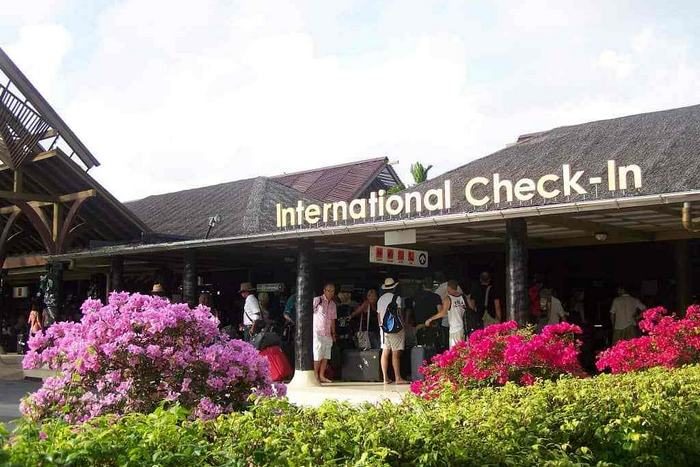
There are two ways to reach Koh Samui by air: a flight to the island's own airport, or a flight to a mainland airport at Surat Thani or Nakhon Si Thammarat followed by a road transfer and a ferry across.
Since 28 April 2026 an airline has sold that second route as a single booking, and the ferry operators Seatran and Raja both list the two mainland airports as pickup points in their own booking systems. The comparison below sets out what each option asks of you.
The two ways to reach Koh Samui
| What differs | Fly into Samui | Fly to the mainland, then ferry |
|---|---|---|
| Airport | Samui International Airport (USM), on the island | Surat Thani (URT) or Nakhon Si Thammarat (NST), on the mainland |
| Who flies there | Bangkok Airways, Scoot from Singapore, Berjaya Air from Subang | the low-cost carriers that serve the two mainland airports |
| How you buy it | one flight | a flight and a ferry bought separately, or a single Fly2Ferry booking with Thai Vietjet |
| The crossing | none | a road transfer to Donsak Pier, then about 1 hour 30 minutes to Samui with Seatran or Raja |
| From Bangkok by surface | not applicable | Bangkok Airways puts bus and ferry at 9 to 11 hours, and train and ferry at 10 to 12 hours |
| Where you arrive | the airport itself | Nathon, Lipa Noi, Bangrak or Pralarn, which sit on different sides of the island |
| If something goes wrong | one airline, one ticket | on Fly2Ferry, Thai Vietjet limits its liability to the air segment, and the booking cannot be refunded or changed once confirmed |
| Weather exposure | one leg | two legs, and the sea leg is the one that suffers in the October and November monsoon |
Flying into Samui Airport
Samui International Airport (USM) is operated by Bangkok Airways, which is also the airline selling most of the seats into it. On figures reported in March 2026, Samui accounted for 65% of Bangkok Airways' own passenger traffic, against a network of 25 routes and 19 destinations in total. In practice a traveller's realistic set of choices into the island is short.
Scoot flies in from Singapore, and Berjaya Air announced a service from Subang, near Kuala Lumpur, starting on 22 April 2026. Both of those are international routes into the island. The airport handled more than 3.02 million passengers in 2025, on its operator's own account.
An improvement project reported in March 2026 was due to start in the second quarter of that year, taking the airport towards six million passengers a year and 11 gates. Reports on the completion date disagree: earlier coverage put it at 2027, while a March 2026 trade report puts it at 2030, and either way building work is likely to be part of the picture for some time. What the terminal is like to use is covered on the Koh Samui Airport page.
Bangkok Airways gives the Bangkok flight as one hour on one of its own guides and one hour thirty on another, so budget for the longer figure when you plan a connection at either end.
What a Bangkok Airways fare includes
The airline's own summary of what comes with a ticket is up to 20 kg of checked baggage, an in-flight meal, seat selection and airport lounge access. Allowances differ by class, so check the class you are buying against Bangkok Airways' own baggage allowance page before you pack.
Lounge access on a Bangkok Airways ticket is the inclusion that catches people out. Business Class passengers get it without paying, FlyerBonus Premier and Premier Plus members can redeem points for it, and an Economy passenger can pay to upgrade into the lounge. Seeing it listed as an inclusion is not the same as it being free for everyone on the aircraft.
Flying to the mainland and crossing by ferry
Two mainland airports feed the island: Surat Thani Airport and Nakhon Si Thammarat Airport. As of August 2026, low-cost carriers serving Surat Thani included Thai AirAsia, Nok Air, Thai Lion Air and Thai Vietjet Air, and the same names served Nakhon Si Thammarat. From either airport the journey continues by road to Donsak Pier and then by ferry.
Buying both legs as one booking
Thai Vietjet sells this route as Fly2Ferry, which it describes as combining air transport with ferry and ground transport under a single booking. It runs from Bangkok's Suvarnabhumi Airport (BKK) into Surat Thani or Nakhon Si Thammarat, with a van to Donsak Pier and a catamaran onward to Samui, Koh Phangan or Koh Tao. It has been bookable since 28 April 2026.
The terms are where this option costs you something, and the airline states them plainly. Its liability is limited to the air transportation segment only, and the service is operated by third-party providers with the airline acting as an agent. A Fly2Ferry booking is non-refundable and non-changeable after confirmation, including the route, the travel date and the passenger name.
What Thai Vietjet does undertake is to re-accommodate you when its own leg fails: if a delay, cancellation or schedule change stops you continuing, it may put you on the next available flight, and a ferry or vehicle delay may be handled by moving you to the next available departure. In what it calls Extraordinary Circumstances, a refund for the ferry segment may not be available. Where a change is possible at all, the airline asks to be told at least 48 hours before the scheduled departure.
On the ferry leg the allowance is one piece per person, with a large piece capped at 32 kg. Excess baggage and sports equipment carry a surcharge, and the airline publishes those figures with its Fly2Ferry terms.
The ferry operators sell the same journey themselves. Seatran runs its own transfers to and from both mainland airports and their towns, and Raja sells combined tickets that start at Surat Thani Airport, Nakhon Si Thammarat Airport or Surat Thani train station. Any airline serving either mainland airport can therefore be the first leg.
Which pier you land at
Seatran crosses from Donsak to Nathon on the west coast, and Raja crosses from Donsak to Lipa Noi, also on the west. The ferries do not all land in the same place, and the piers sit on different sides of the island. Both operators put the crossing at about 1 hour 30 minutes.
Lomprayah runs from three piers on Koh Samui, and its own guidance on those piers is specific about which suits where you are staying.
- Bangrak suits Chaweng, Bophut and Fisherman's Village, and it is the closest pier to Samui Airport at roughly 10 to 15 minutes by car.
- Nathon suits Nathon itself, Lipa Noi, Taling Ngam and the western side of the island.
- Pralarn suits Maenam, Ban Tai and northern Koh Samui.
Lomprayah puts Samui to Koh Phangan at about 30 minutes by catamaran from any of the three piers, and Samui to Koh Tao at about two hours by speedboat from Bangrak. Its own advice is to book ahead for long holidays and peak periods. Which pier your ticket uses decides how far you then travel by road, so it is worth checking before you buy rather than after you land.
How the seasons affect the ferry crossing
Koh Samui sits on the Gulf coast, where the wet season falls at a different time of year from the Andaman coast on the other side of the peninsula. The heaviest rain arrives in October and November, with November the wettest month on Bangkok Airways' own weather guide, and the driest stretch runs from December to February. Through the mid-year months, when the Andaman coast is wet, Samui is comparatively dry.
The sea leg is the one that suffers: rough seas in the monsoon months are among the causes UK government travel advice names for boat accidents in Thailand, alongside overloading and poor maintenance. Samui is an exception to the national pattern; see the guide to the best time to visit Thailand. The mainland route is at its least appealing in exactly the months when Samui's own weather is worst.
Routes to and from Koh Samui, and which way in
The route pages carry the typical schedule for each pair and the booking form, and domestic flights in Thailand covers how the network works more generally.
- Bangkok to Koh Samui and Koh Samui to Bangkok
- Chiang Mai to Koh Samui
- Phuket to Koh Samui
- Krabi to Koh Samui
- Koh Samui to Pattaya
For the mainland alternative the relevant pairs are Bangkok to Surat Thani and Surat Thani to Bangkok. The second mainland gateway has its own Nakhon Si Thammarat destination guide.
A single flight is one contract and one leg, and it is the sea crossing that suffers in the monsoon months. The mainland route brings the low-cost carriers into play, but it adds a road transfer, a sea crossing and, on a Fly2Ferry booking, terms you cannot change once they are confirmed. Once you have landed, the Koh Samui destination guide covers the island itself.