!
Latest updates
How to Get to Koh Lanta: Flights, Roads and Ferries
Updated 8th Sep 2026
Things to Do on Koh Lanta: Diving, Old Town and the National Park
Updated 8th Sep 2026
Krabi Province Guide: Airport, Krabi Town and Choosing a Base
Updated 8th Sep 2026
Thailand for couples: which islands and parks close, and when
Updated 8th Sep 2026
Thai domestic flight tickets: fare rules, baggage deadlines and passenger rights
Updated 8th Sep 2026
Loei Destination Guide
Updated 6th Sep 2026
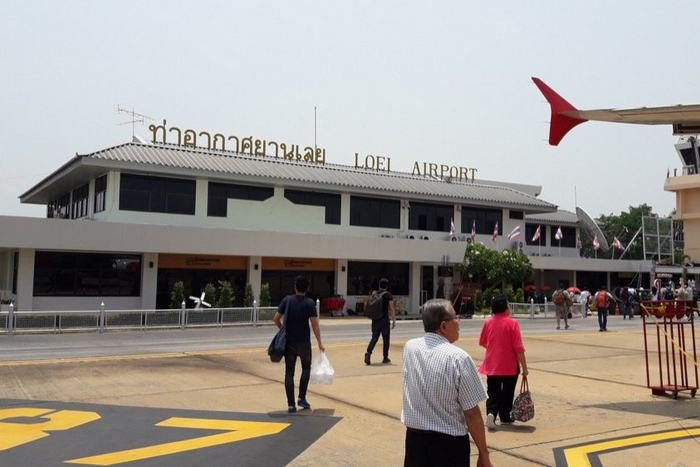
Loei is a province in Thailand's upper northeast, on the border with Laos. It covers about 10,500 square kilometres and had a population of 632,187 in 2024, ranking 42nd of the country's 77 provinces by population. Its main draws are two national parks, a wildlife sanctuary and a 16th-century temple, and there is scheduled air service from Bangkok.
Getting there by air
Thai AirAsia (FD) flies between Bangkok's Don Mueang Airport and Loei. Flights from Bangkok to Loei and the return route to Bangkok are both listed on this site, alongside Thai AirAsia's own fare conditions.
Loei Airport covers the terminal itself, including facilities and ground transport into town.
National parks and a wildlife sanctuary
Phu Kradueng National Park
Phu Kradueng National Park was gazetted in 1962 as Thailand's second national park. It covers 348 square kilometres in Phu Kradueng district, reaching 1,316 metres at its highest point, Khok Moei.
Tourism and overnight stays on the summit close every year from 1 June to 30 September and reopen on 1 October, while the Si Than visitor centre at the base and the Tat Hong waterfall area stay open as normal. Anyone visiting Loei during that closure cannot climb Phu Kradueng at all, whatever else is open in the province.
Phu Rua National Park
Phu Rua National Park was established in 1979, about 52 kilometres west of Loei town in Phu Rua and Tha Li districts. It covers around 121 square kilometres and its highest point reaches 1,365 metres. The name translates as "Boat Mountain", from the peak's resemblance to the bow of a large junk.
Phu Luang Wildlife Sanctuary
Phu Luang Wildlife Sanctuary was declared in 1974 and re-proclaimed with its present boundary in 1991, covering around 897 square kilometres across Wang Saphung, Phu Rua, Dan Sai and Phu Luang districts. It is open from October to May and closed for the rainy season in between, and visitors on its nature trails must be accompanied by an official guide, arranged 15 days in advance through the Wildlife Conservation Bureau. In the hot season, February to April, temperatures average 20 to 24 degrees Celsius and white roses, red roses and wild orchids come into bloom, best seen in February and March.
Phra That Si Song Rak and Phi Ta Khon
Phra That Si Song Rak
Phra That Si Song Rak stands on the bank of the Man River in Dan Sai district. Construction began in 1560 and finished in 1563, built as a pact between the kingdoms of Ayutthaya and Lan Xang not to invade each other and to stand together against Burmese expansion.
A ceremony is held every year on the full moon of the sixth lunar month. Visitors are asked not to wear red clothing near the stupa, a colour traditionally associated with the blood of the wars the pact ended.
Phi Ta Khon Festival
The Tourism Authority of Thailand describes Phi Ta Khon as a masked performance in Dan Sai district, part of the Buddhist Bun Luang merit-making festival. It falls in late June or early July, with the exact days set annually and announced only a few months ahead.
The Mekong border and Kaeng Khut Khu
Much of Loei's border with Laos is formed by the Mekong River. Kaeng Khut Khu is a stretch of stone rapids in a bend of the Mekong, east of Chiang Khan. The rocks are most exposed in the dry season, from around February through to May, when the river's level drops.
Frequently asked questions
How do I get to Loei by air?
Thai AirAsia flies between Bangkok's Don Mueang Airport and Loei, in both directions.
What can I do in Loei?
Loei's main draws are its national parks, Phu Kradueng and Phu Rua, plus the Phu Luang Wildlife Sanctuary and cultural sites including Phra That Si Song Rak and the Phi Ta Khon festival in Dan Sai district. Kaeng Khut Khu near Chiang Khan is a riverside spot on the Mekong, which forms much of the province's border with Laos.
When is Phi Ta Khon held in Loei?
Phi Ta Khon is held in Dan Sai district in late June or early July. The exact days change from year to year and are announced only a few months ahead, so check current dates closer to the time.
Is Loei cold?
Weather-data aggregators put Loei's cool-season nights at around 5 to 15 degrees Celsius in the valleys, colder on the mountain tops, with the warmest month averaging highs around 36 degrees Celsius. These are aggregator estimates rather than official meteorological records, so treat them as approximate.