!
Latest updates
How to Get to Koh Lanta: Flights, Roads and Ferries
Updated 8th Sep 2026
Things to Do on Koh Lanta: Diving, Old Town and the National Park
Updated 8th Sep 2026
Krabi Province Guide: Airport, Krabi Town and Choosing a Base
Updated 8th Sep 2026
Thailand for couples: which islands and parks close, and when
Updated 8th Sep 2026
Thai domestic flight tickets: fare rules, baggage deadlines and passenger rights
Updated 8th Sep 2026
Sakon Nakhon Destination Guide
Updated 7th Sep 2026
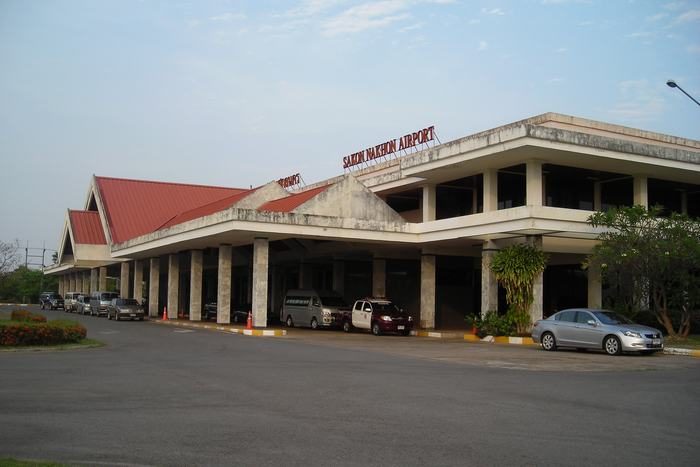
Sakon Nakhon is an upper-Isan province with a large lake at the edge of its main town and Phu Phan National Park about 25 kilometres out of it. It suits a traveller who wants Khmer and Lao monuments, forest-temple country and a living indigo craft, and who is not expecting resort infrastructure. The Tourism Authority of Thailand (TAT) describes the province as having neither traveller-oriented hotels nor much tourism infrastructure.
Getting there by air
Nok Air and Thai AirAsia both file scheduled domestic service to Sakon Nakhon Airport (SNO) in the Department of Airports' published flight data. That data runs to early 2026, and in every month it covers, the scheduled arrivals came from Bangkok's Don Mueang. Suvarnabhumi does not appear against this airport in any month of it.
The schedule and the booking form for Bangkok to Sakon Nakhon sit on that route's own page, as do those for the return leg, Sakon Nakhon to Bangkok.
Getting there overland
Sakon Nakhon is not on the passenger rail network. The nearest railhead in service is Udon Thani, and an air-conditioned bus service runs on from there. The Ban Phai to Nakhon Phanom line now under construction is routed through Maha Sarakham, Roi Et, Mukdahan and Nakhon Phanom, so it will not put Sakon Nakhon on the network either.
By road, TAT gives the distance from Bangkok as roughly 650 kilometres up Highway 2.
When to go
The Department of National Parks, Wildlife and Plant Conservation (DNP) gives Phu Phan National Park three seasons: cool from October to January, hot from February to April, and rainy from May to September. Its figures for the park are an annual average of about 26.3 degrees Celsius, a December low of about 11.5, and roughly 1,353 millimetres of rain a year. Those figures are measured in the park, not in the town.
The wax castle parade, the province's own version of the end of Buddhist Lent, falls in October and shifts with the lunar calendar each year: TAT listed the 2025 festival, with a long-boat race, for 1 to 7 October, run by the city municipality. Check the current year's dates before booking around it. Two things narrow the window further: Phu Phan's two named waterfalls are open only from 1 July to 31 October, and Indigo Street opens on Saturdays and Sundays only.
Nong Han, the lake the town sits on
Nong Han is the largest natural freshwater lake in Thailand's Northeast, about 7 kilometres wide and 18 kilometres long. A Cabinet resolution of 7 November 1989 designated it a natural site worthy of conservation. It is fed by many streams and is the source of the Nam Kam river, which flows into the Mekong.
The Office of Natural Resources and Environmental Policy and Planning records more than twenty islands in it. Ko Don Sawan is the largest and carries a ruined temple, old Buddha images, large trees and a lot of birds; Ko Kaeo, Ko Don Sakham and Ko Don Sathung have shelters on them.
It is working water as well as scenery. The same official record lists its uses as agriculture, domestic supply, fisheries, livestock, aquaculture, boat racing, recreation and tourism, and also as receiving and treating wastewater.
Phra That Choeng Chum, in the town
Wat Phra That Choeng Chum stands on Charoen Mueang Road, and its eastern boundary is the public land of Nong Han, so the compound backs onto the lake. The temple was founded in 1757. It was earlier called Wat Phra That Sasadaram and is still known locally as Wat Phra That.
The stupa is brick and stucco on a square base, with a squared-lotus spire and no decorative ornament, and its form follows Phra That Phanom. TAT gives its height as about 24 metres. The base is built as a gateway arch of laterite with false Khmer-style arched doors, and it is solid inside.
At the entrance to the tunnel inside the stupa there is a stone inscription in Khmer, dated by the Sakon Nakhon Provincial Office of Buddhism to roughly the twelfth century, recording grants of land to village heads along with servants and goods. The stupa was raised over venerated Buddha footprints. TAT's own page for the temple says the construction and history of the stupa are not settled.
In the assembly hall beside the stupa is Luang Pho Phra Ong Saen, which TAT calls the province's most venerated Buddha image: brick and stucco, lacquered and gilded, in the Chiang Saen style and 3.20 metres from its base to the top of its head. The Fine Arts Department has restored it, last recorded in 1962. The old ordination hall is registered as a national ancient monument, and the stupa is the emblem on the provincial seal.
The spire has been struck by lightning several times, there having been no conductor in earlier years, and the stupa has been repaired repeatedly; the present one was built over an original in laterite. An annual homage festival falls in the second lunar month, around January, and the days move with the lunar calendar, so check them locally. TAT lists parking at the temple.
Two monuments outside town
Phra That Narai Cheng Weng stands at Wat Phra That Narai Cheng Weng in Tambon Na Weng, in Mueang district.
Phra That Phu Phek, also called Prasat Phu Phek after the Khmer tower-sanctuary form it takes, is up on the Phu Phan ridge at Ban Phu Phek in Tambon Na Hua Bo, Phanna Nikhom district. You climb 491 steps to reach it, and it is open from 06:00 to 18:00.
It was never finished: there is no roof and no spire, and only the beams are in place. The sandstone prasat on its laterite base stands 7.67 metres. A square opening admits a shaft of sunlight that marks the seasons, and the provincial administration gives 21 March, 21 June and 21 December as the dates it marks.
That same source dates it to roughly the eleventh century, built for Hindu worship and later converted to Buddhist use, with a Khmer-style Buddha image inside, and calls it the highest ancient Khmer prasat in Thailand.
One local story ties the two sites together. A party of men and a party of women each set out to raise a stupa for the Buddha's breastbone relic. The men saw the Phek star, a trick by the women's side, and stopped work. That is why this prasat has no roof and why the hill is called Phu Phek. The stupa the women finished is Phra That Narai Cheng Weng.
Phu Phan National Park
The park headquarters is about 25 kilometres from Mueang Sakon Nakhon along Highway 213 and stands beside the road. The park covers 415,439 rai of sandstone ridge, with elevations from 200 to 567 metres; its highest point, Phu Khiao at 567 metres, is over the boundary in Kalasin province. Dry dipterocarp, mixed deciduous and dry evergreen forest all occur in it.
The DNP lists not fewer than 162 species of wildlife, among them wild elephant, sambar, common muntjac, wild pig, Phayre's leaf monkey, sun bear, northern pig-tailed macaque and smooth-coated otter. The sites it lists for visitors are Pha Nang Moen, Tham Seri Thai, Saphan Phi Phan (a natural stone bridge), Nam Tok Kham Hom, Nam Tok Pricha Suk San, Phra That Phu Phek and Pha Sawoei. There is an entrance fee, and you are asked to keep the receipt with you inside the park.
What is closed, and when
The DNP's closure announcement of 18 December 2025, in force from 1 January 2026, shuts named sites in this park rather than the park itself.
| Site | Closed |
|---|---|
| Kham Hom Waterfall and Pricha Suk San Waterfall | 1 November to 30 June |
| Tham Seri Thai and Saphan Phi Phan, the natural stone bridge | 1 January to 31 May |
That first row means the two waterfalls are open from 1 July to 31 October and shut for the other eight months of the year. The cave and the stone bridge are open from 1 June to 31 December. If the waterfalls are the reason you are going, July to October is the window.
Mobile coverage inside the park is listed site by site and it is not uniform. AIS and TRUE-DTAC are both listed at Pha Nang Moen, Kham Hom Waterfall, Pricha Suk San, Tham Seri Thai, the natural stone bridge and Pha Sawoei, but only AIS at Phra That Phu Phek. The park's youth-camp restaurant, Khai Yaowachon Rak Rao Rak Lok, is open daily from 08:00 to 16:30, and the DNP's own page for Phu Phan carries the headquarters telephone numbers.
Two more national parks reach into the province, Phu Pha Lek and Phu Pha Yon, and the same announcement closes named sites in both. At Phu Pha Lek, which the province shares with Udon Thani and Kalasin, the Pha Phak Wan prehistoric rock paintings are shut from 1 March to 30 June, and several of its waterfalls from October or November until the end of May. At Phu Pha Yon, which the province shares with Nakhon Phanom and Mukdahan, the Kaeng Pho, Kham Nam Sang, Rak Sai Yoi and Pha Phueng waterfalls are closed for the whole of May.
Natural indigo
Sakon Nakhon dyes with kram, the local indigo plant, in a vat called mor kram, and the cloth is sold as Phakram Sakon Nakhon. Indigo Street runs along Phakram Road in front of Wat Phra That Choeng Chum, 200 metres from the stupa, and it opens on Saturdays and Sundays only, from 16:00 to 20:00. TAT describes it as the largest collection of indigo shops and designs in Thailand.
That two-evening window is the thing to plan the trip around. If your nights in town run Monday to Friday, the street is shut.
Ban Kham Pramong in Tambon Sawang, Phanna Nikhom district, began as a weaving group started by local housewives and grew into a community learning centre where the whole indigo process is shown. Ban Don Koi, in the same district, is another indigo village.
Forest temples and the monk museums
TAT's framing for the province is that it lies within the Phu Phan range and has many forested temple retreats for meditation, where a number of well-known monks live. The Phra Archan Man Phurithatto Museum is at Wat Pa Sutthawat in That Choeng Chum, Mueang Sakon Nakhon, opposite the Provincial Government Centre on Sukkasem Road, and shows a wax figure of the monk, his personal belongings and exhibits on his life and teaching.
TAT also lists the Achan Fan Archaro Museum and Wat Tham Kham among the province's attractions, and Wat Tham Pha Daen at Dong Mafai in the Phu Phan range, which it describes as an old temple, shaded by trees and suited to meditation.
Eat the freshwater fish cooked
Raw and fermented freshwater fish dishes, koi pla and pla ra above all, carry a liver-fluke risk that is higher in this part of Thailand than almost anywhere. Research published in Tropical Medicine and Health in February 2026 found a high rate of Opisthorchis viverrini infection in a community in Kusuman district, in this province, and records that northeastern Thailand has the world's highest incidence of bile-duct cancer, with the adult worm central to it. Grilled and cooked dishes are not the problem; order freshwater fish cooked through.
Frequently asked questions
Which airlines fly to Sakon Nakhon, and which Bangkok airport do they use?
Nok Air and Thai AirAsia both file scheduled domestic service to Sakon Nakhon in the Department of Airports' published data, which runs to early 2026. Every scheduled arrival in that data came from Don Mueang, and Suvarnabhumi does not appear against this airport in any month it covers.
Can you get to Sakon Nakhon by train?
Not to Sakon Nakhon itself. It is not on the passenger rail network, and the nearest railhead in service is Udon Thani, with an air-conditioned bus service on from there. The Ban Phai to Nakhon Phanom line under construction runs through Maha Sarakham, Roi Et, Mukdahan and Nakhon Phanom, so it will not serve Sakon Nakhon.
Is Phu Phan National Park open?
The park is open. Under the DNP announcement in force from 1 January 2026, Kham Hom and Pricha Suk San waterfalls are closed from 1 November to 30 June, and Tham Seri Thai and the natural stone bridge from 1 January to 31 May. Nothing else in the park is closed by that announcement.
When is the Sakon Nakhon wax castle festival?
It falls around the end of Buddhist Lent, which puts it in October, and the date moves with the lunar calendar every year. TAT listed the 2025 festival and its long-boat race, run by the city municipality, for 1 to 7 October. Check the current year's dates before you book.
Where can I buy Sakon Nakhon indigo?
Indigo Street, on Phakram Road in front of Wat Phra That Choeng Chum, opens on Saturdays and Sundays from 16:00 to 20:00 and is where the shops are concentrated. Ban Kham Pramong in Phanna Nikhom district is a learning centre where the dyeing and weaving are demonstrated.